Prime Minister to Sudanese Echoes: We Have Contracted Nine Tankers to End the Fuel Crisis
Kamil Idris: We Have Completely Closed the Door to Negotiations with the RSF Militia
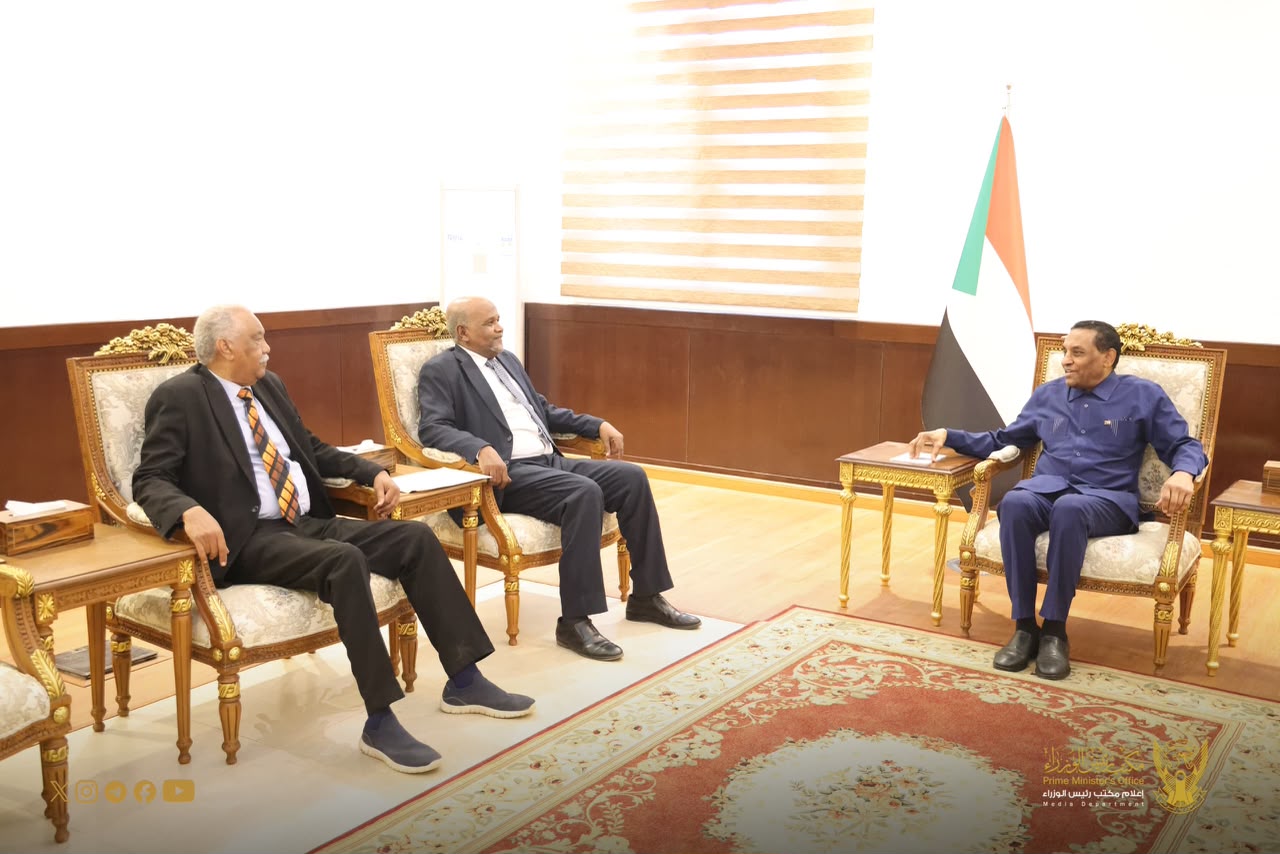
Sudanese Prime Minister Professor Kamil Idris has announced an imminent easing of the country’s fuel crisis, revealing that contracts have been concluded for nine tankers carrying petroleum products, which have already arrived at the port.
In an exclusive interview with the “Sudanese Echoes” platform on Monday, Idris explained that the government was moving towards liberalising strategic commodities as a key step towards ensuring adequate market supplies by opening the door to competition among importers. He noted that this move would be accompanied by protective measures, including expanding the network of subsidised sales outlets to absorb the impact of the decision and ease the cost-of-living burden on citizens.
The Prime Minister acknowledged the severe living conditions caused by the war imposed on the Sudanese people, describing it as “a comprehensive war with economic, political and military dimensions” that had imposed a heavy cost on the state. He added that the government relied entirely on its own resources to support the war effort, without receiving any external assistance.
Idris attributed the sharp rises in inflation rates to the circulation of counterfeit currency and systematic smuggling operations, particularly gold smuggling. He affirmed that the executive authorities were currently working to curb these practices by deploying joint security teams to combat smuggling and protect the national economy.
On the military and political fronts, the Prime Minister stressed that the door to negotiations with the rebel Rapid Support Forces (RSF) militia had been completely closed, affirming that this was the choice of the Sudanese people, not merely a government decision, given the scale of the widespread violations committed by the militia, including the destruction of infrastructure, breaking into homes, theft, looting, and attacks on vital facilities and power stations.
Idris considered the recent escalation in drone attacks by the militia to reflect its complete collapse on the battlefronts in the face of the significant advances made by the Sudanese Armed Forces (SAF) on all fronts. He said this had caused considerable frustration among the countries sponsoring the rebellion.
The Prime Minister expressed deep regret over the involvement of some neighbouring countries in the war against Sudan, naming neighbouring Ethiopia. He noted that Sudan had exercised the utmost restraint in response to Ethiopian transgressions, while stressing that the Sudanese Armed Forces were fully capable of repelling any aggression. He also praised the extraordinary resilience of the army and other regular forces in the “Battle of Dignity”.
On the political front, Professor Kamil Idris affirmed the government’s openness to all peace initiatives, provided that they lead to a just peace that preserves the Sudanese people’s dignity and honour. He noted that the peace proposal submitted by the government had received a broad welcome from the international community.
The Prime Minister praised the progress of the “Sudanese-Sudanese” dialogue, expressing hope that it would succeed in bringing political forces towards consensus on national principles. He reiterated that his government’s primary mission was to steer the country through this stage and prepare it for the next electoral phase.