Indirect Talks Held Between Sudanese Parties and the “Janjaweed–Hamdok” Alliance in Ethiopia
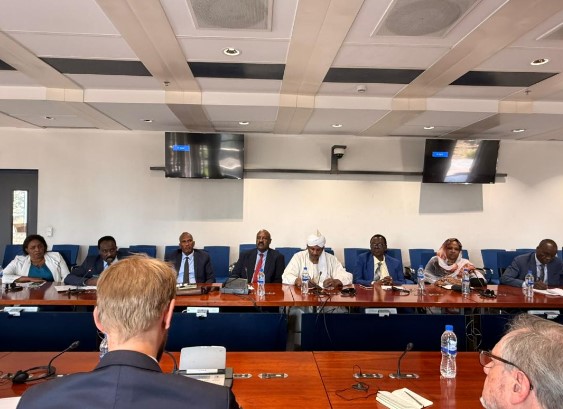
A series of meetings were held on the sidelines of the African Union summit in Addis Ababa between Sudanese political forces and the Quintuple Mechanism tasked with resolving the Sudanese crisis. The mechanism comprises the United Nations, African Union, European Union, Arab League, and the Intergovernmental Authority on Development (IGAD), in implementation of the African Peace and Security Council resolution issued on February 13.
These meetings are expected to conclude Tuesday with indirect sessions between the mechanism and various Sudanese forces inside the country, including national parties, the “Sumoud” group, and the “Tasis” Janjaweed alliance.
Mohamed Sidahmed Al-Jakoumi, head of the National Forces Coordination and the delegation participating in the meetings, told “Al-Muhagig” that the talks addressed all steps necessary to achieve peace and end the war. The delegation proposed two parallel tracks: a political track involving all civilian forces except the Janjaweed “Tasis” alliance, and a military track based on the Jeddah Agreement between the Sudanese Armed Forces and militias. Al-Jakoumi stressed that the Janjaweed “Tasis” alliance, led by Mohamed Hamdan Dagalo, should join the military track as an armed force, while civilian forces would engage with their civilian counterparts. He added that the presence of a civilian leadership within the “Sumoud” group makes dialogue possible despite differences.
Al-Jakoumi emphasized that the delegation prioritized a ceasefire as a prerequisite for ending the war, especially given repeated targeting of political forces inside Sudan by militia drones, widespread violations including mass killings, tribal-based attacks, and systematic destruction of infrastructure. He noted that the army is making advances on fronts in Kordofan, with large-scale operations expected soon in Darfur. The reopening of the capital’s airport and return of government personnel and citizens to Khartoum were cited as indicators of improving security and gradual stability.
He added that political forces have begun completing the structures of the transitional period, including the legislative council, following consultations with President of the Transitional Sovereignty Council (TSC) Abdel-Fattah Al-Burhan, noting that there are no objections to dialogue with any civilian party.
Al-Jakoumi also addressed past disagreements with the “Sumoud” group, saying it had previously refused to sit with national forces in earlier meetings, and that legal concerns are no longer an obstacle after travel bans on their members were lifted. He expressed confidence that the group’s members would be protected if they chose to return home.
He criticized the limited popular representation of some opposition forces abroad, particularly “Sumoud,” pointing out that former Prime Minister Abdalla Hamdok lacks an organized political party, and allied parties have limited grassroots presence. He called on these forces to return to the country and engage directly with the Sudanese people.
The Quintuple Mechanism presented a vision paper for a solution, which received preliminary responses from the Sudanese parties, and will be studied in more depth before a final reply is submitted.
Participants in the Addis Ababa meetings included political and community leaders such as Abdelrahman Al-Sadig Al-Mahdi, Imam Ahmed Al-Mahdi, Khalid Al-Fahl, Sultan Al-Masalit Saad Bahr-Eddin, Abdelaziz Ushar, and Mariam Al-Sharif.