
Sudanese Foreign Minister Condemns Washington from UN Podium over Denial of Al-Burhan’s Visa
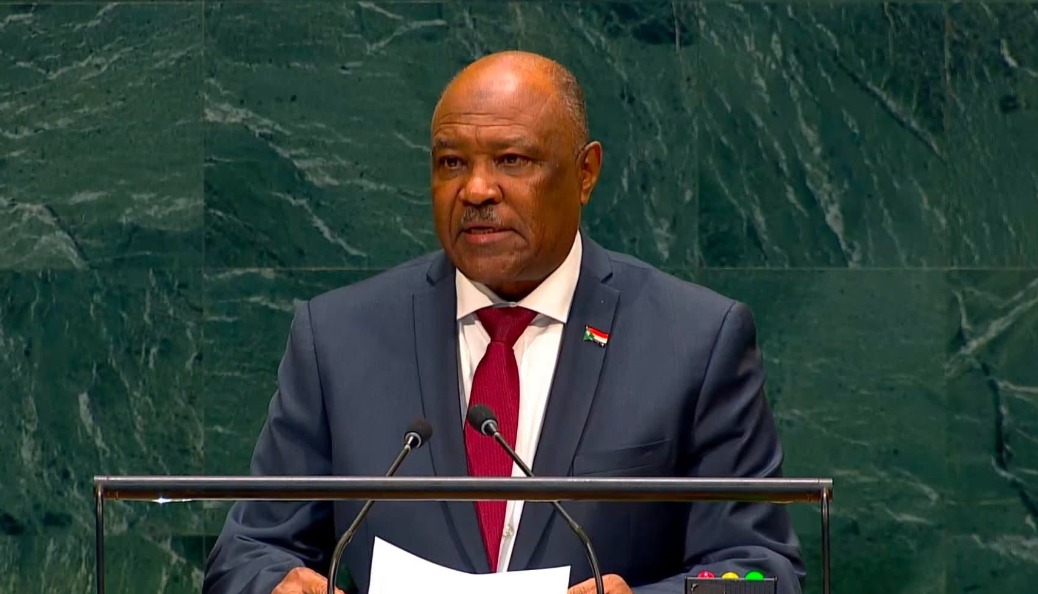
Sudanese Minister of Foreign Affairs and International Cooperation Ambassador Mohi-Eddin Salem delivered Sudan’s address on Monday during the general debate of the 81st session of the United Nations General Assembly in New York, sparking a sharp diplomatic dispute with his strong public protest against the United States’ refusal to grant an entry visa to President of the Transitional Sovereignty Council (TSC), General Abdel-Fattah Al-Burhan, preventing him from personally leading his country’s delegation.
In his address, the Foreign Minister considered the US position an explicit breach of Washington’s international obligations under the 1947 “Headquarters Agreement” concluded between the United Nations and the host country.
He called on the United Nations General Assembly to take a firm stand to prevent such violations from recurring and to ensure respect for the sovereignty of Member States and the right of their leaders to participate in UN forums.
International reports revealed that the US administration had conditioned granting Al-Burhan a visa on his prior acceptance of a proposal for an unconditional 90-day truce and ceasefire, which the TSC President rejected, considering it political blackmail and an infringement on national decision-making.
In the same context, the minister revealed that Sudanese authorities had monitored the launch of numerous military and logistical attacks in support of the Rapid Support Forces (RSF) militia from within the territories of neighboring countries in the region, calling on the international community to take firm positions and impose deterrent sanctions against those countries supporting the rebellion. Salem linked an end to the war in Sudan to pressure on the militia’s sponsors in the region and some neighboring countries to halt arms supplies and the provision of medical treatment to its wounded and mercenaries.
He stressed the state’s firm position that all weapons must be exclusively under the control of the Armed Forces and official institutions, affirming that there would be no compromise on completely eliminating and uprooting the rebel militias to ensure the country’s stability and preserve its constitutional order.
The Foreign Minister renewed the Sudanese government’s commitment to providing all administrative and security facilities to ensure the flow of relief and humanitarian assistance, and to securing routes and convoys to deliver aid to those affected by the war across Sudan’s various regions.
Meanwhile, the Foreign Minister stressed the great importance Khartoum attaches to maintaining the stability of the Gulf region and the security of the Red Sea, ensuring freedom of international navigation, and confronting all terrorist threats in these strategic waterways.
At the same time, he called for reform of the United Nations system and for Africa to be granted two permanent seats on the UN Security Council to end its historical marginalization.