Minister Reveals Shocking Facts About “Slave Markets” and Sexual Enslavement in Sudan
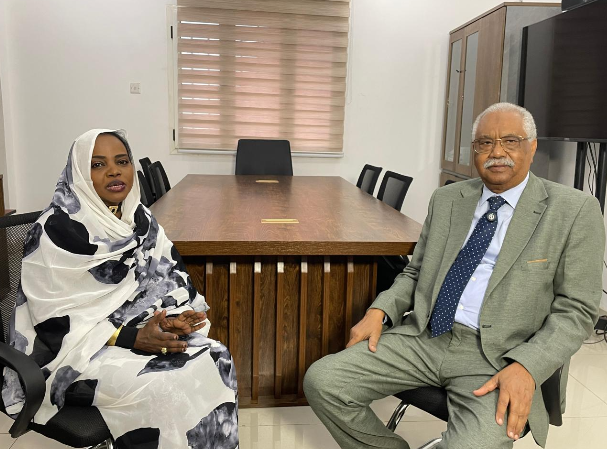
Khartoum: Salah Omer El-Sheikh
The State Minister for Human Resources and Social Development, Dr. Suleima Izhaq, has made the most serious and starkest official revelations since the outbreak of the conflict, breaking the wall of silence and exposing horrifying facts about the systematic transformation of abduction, enslavement and rape into a military doctrine, as well as the use of ransom trafficking operated by the rebel Rapid Support Forces (RSF) militia to destroy communities and tear apart Sudan’s social fabric.
In an extensive interview with the “Hababkom” podcast on Sudanese Echoes platform, which will be broadcast later, Suleima Izhaq said the war is an openly declared conflict whose most prominent target is women.
In the interview, conducted by journalist Salah Omer El-Sheikh, the minister said the ongoing war in Sudan has been systematically directed into “a brutal war waged on women’s bodies,” with rape and abduction used as military tools to dismantle communities and destroy the social fabric.
She said reports circulated by citizens at the beginning of the war about the existence of “markets for enslaved women and their trafficking” were neither exaggerated nor merely politically motivated claims. Rather, she said, they reflected a grim reality subsequently substantiated by human rights reports and statements by the United Nations.
She revealed that cases had been documented involving the prolonged abduction of girls and women who were held captive for periods ranging from one to two months, in what is legally recognized as sexual slavery, during which they were repeatedly assaulted by militia members and foreign mercenaries.
Based on survivors’ testimonies, the minister explained that sexual violence and rape were not merely “individual acts of indiscipline,” but rather conduct systematically adopted by militia commanders as a weapon of war. She said its motives varied geographically. In Darfur, rape was used as a tool of ethnic and tribal humiliation and direct subjugation. In Khartoum and Al-Gezira, meanwhile, the militia stormed safe homes and turned them into scenes of collective and brutal violations for purposes of social and class-based revenge, while forcing fathers, mothers and siblings to witness rapes at gunpoint.
Dr. Suleima made a particularly painful revelation underscoring the brutality of the attacks, saying the militia’s sexual crimes had extended far beyond the age groups normally associated with conflict-related sexual violence. She said brutal and collective assaults had been documented against infants as young as one year old and girls as young as five, some of whom are still undergoing complex surgical procedures to repair severe physical injuries, as well as against women in their eighties.
The minister warned that Sudan would pay a heavy price for generations as a result of these crimes, pointing to a significant spread of sexually transmitted diseases among survivors, including HIV/AIDS and viral hepatitis, as well as a sharp increase in cases of cervical cancer attributed to mass sexual enslavement.
The minister also revealed that some grieving families had resorted to catastrophic measures, such as subjecting their daughters to female genital mutilation, including severe forms of cutting, believing that this could prevent rape, or forcing girls into early marriages in an attempt to protect them. She said such measures had effectively produced a new form of enslavement with social approval.
In the same context, the minister issued an urgent appeal to all affected families to immediately approach offices of the International Committee of the Red Cross (ICRC), as a neutral organization, to document information about abducted and enslaved girls and women and trace their whereabouts—whether they remain detained inside Sudan, including in Nyala and other areas under militia control, or have been trafficked and taken across the border.
Dr. Suleima Izhaq concluded with a decisive statement:
“A state that protects its women and holds criminals accountable is a respected state in this world, while a militia that boasts of rape and displacement makes any talk of peace by it nothing more than an obvious lie.”