
El-Alamein Summit Draws New Red Lines in the Region
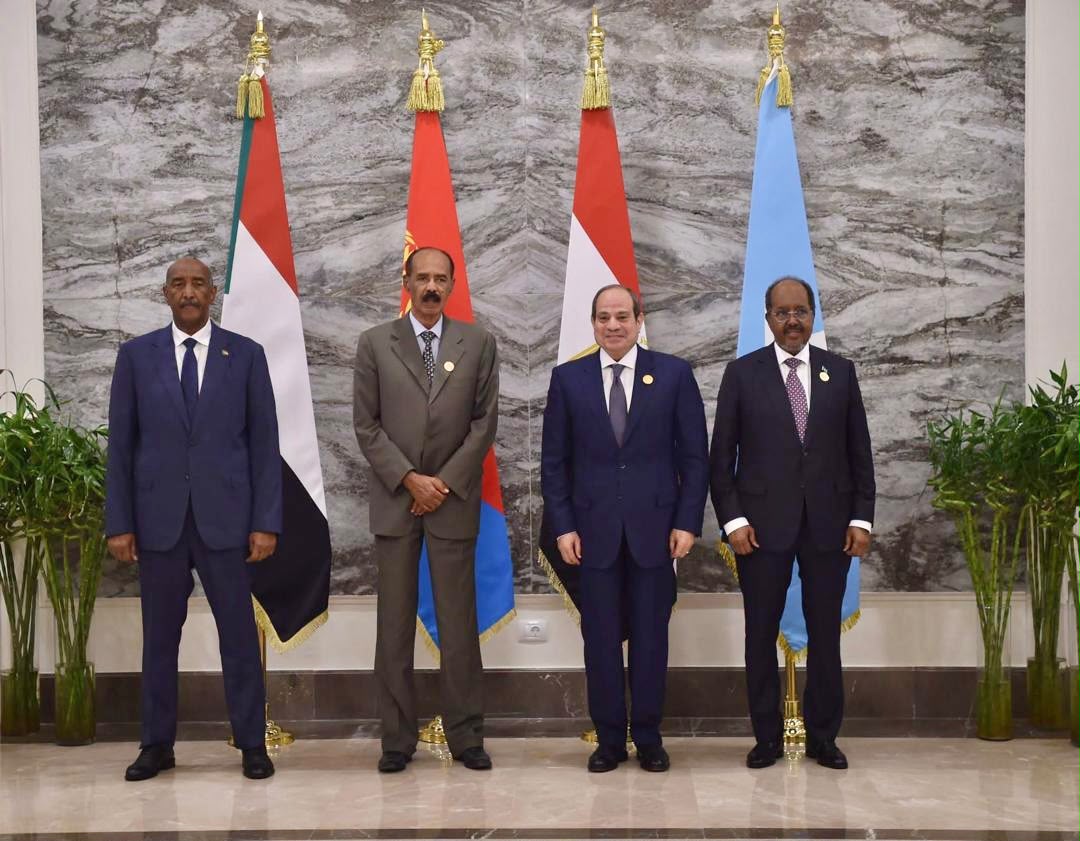
The leaders of Egypt, Sudan, Eritrea and Somalia agreed on a package of strategic decisions to safeguard regional security, led by a categorical rejection of militias and parallel entities in Sudan and Somaliland, as well as a ban on unilateral measures concerning transboundary rivers, foremost among them the Nile.
The quadrilateral summit concluded with a joint statement, the “El-Alamein Joint Declaration,” hosted by Egyptian President Abdel-Fattah Al-Sisi and attended by President of the Transitional Sovereignty Council (TSC) and Commander-in-Chief of the Armed Forces General Abdel-Fattah Al-Burhan, Eritrean President Isaias Afwerki and Somali President Hassan Sheikh Mohamud.
The leaders affirmed their full commitment to supporting Sudan’s unity, sovereignty, territorial integrity and legitimate national institutions. The declaration stressed categorical rejection of the establishment of any parallel entities or the provision of any form of support to mercenaries, while emphasizing the need to encourage the resumption of the political process under exclusively Sudanese ownership and leadership.
The summit renewed its full support for the unity and sovereignty of the Federal Republic of Somalia over its entire territory, declaring its complete rejection of any recognition of or support for the so-called “Somaliland,” considering such actions a blatant infringement of Somali sovereignty. The leaders also called on the international community to provide sustainable funding for the African Union Support and Stabilization Mission in Somalia to enable it to support the Somali Army in combating terrorism and extending state authority.
On water and water security, the leaders affirmed the need to respect international law governing transboundary rivers, foremost among them the Nile, stressing adherence to the principle of no harm and the need for coordination through prior notification, consultation and consensus. The declaration expressed full rejection of any unilateral measures that could harm the existing water uses of the two downstream countries, Egypt and Sudan.
Regarding maritime navigation, the leaders agreed that governance of the Red Sea is an exclusive responsibility of the states bordering it, while firmly reaffirming the principle of freedom of international navigation.
The declaration said the intensive fraternal consultations focused on the need to uphold the fundamental principles of international law as a cornerstone of stability, particularly respect for good-neighborly relations and rejection of interference in the internal affairs of states under any pretext. The leaders also agreed to promote economic, trade and cultural ties among the four countries in a manner that serves the common interests and shared destiny of their peoples.
The leaders agreed to establish a joint mechanism to follow up on the outcomes of the declaration and to hold the quadrilateral summit periodically and whenever necessary to strengthen coordination. The participating presidents expressed their deep appreciation to Egypt for hosting the historic summit.