
No Foreign Deposits: Finance Minister Explains Continued Decline of the U.S. Dollar
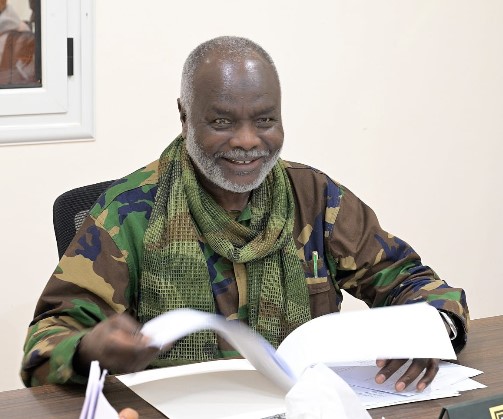
Sudan’s Minister of Finance and Economic Planning, Gebreil Ibrahim, denied that Sudan had received any foreign financial deposit that contributed to the recent improvement in the exchange rate, saying government policies had succeeded in achieving a degree of stability for the Sudanese pound against foreign currencies.
Sudan’s local currency has experienced sharp depreciation in recent weeks before the government intervened by injecting 400 million UAE dirhams in foreign exchange into commercial banks to meet import financing needs.
In an interview with Sudan Television, Gebreil said the country continues to face severe economic challenges as a result of the war, acknowledging the significant hardships endured by citizens. He added, however, that the government is working to address the economic situation and create alternatives to improve living standards.
The minister said that at the beginning of the war he had expected the U.S. dollar to reach around 10,000 Sudanese pounds in 2025 due to halted production and rising demand for foreign currency. He said the measures adopted by the government had helped curb the dollar’s appreciation against the Sudanese pound and predicted that it would continue to decline in the parallel market.
Dr. Ibrahim acknowledged that the appreciation of the Sudanese pound has not yet translated into lower consumer prices.
He said the fundamental solution to the country’s economic crisis lies in increasing production and adding value to Sudanese products instead of exporting them as raw materials.
The minister also disclosed that the government spends about 50 billion Sudanese pounds each month to support the electricity sector by financing maintenance, operations, and the rehabilitation of infrastructure, helping restore electricity to affected areas and improve the stability of power supply.
On the political front, Dr. Gebreil Ibrahim said gaining international allies during wartime is not an easy task, stressing that international relations are based on mutual interests and that support cannot be secured without something in return.
He underscored the importance of providing sufficient funding for the war effort, saying military spending must be adequate to achieve victory. He described the economic war facing the country as an attempt to weaken state resources and its financial capacity.
The minister added that, because of the war, the government had been forced to substantially reduce public sector salaries in order to redirect resources to the war effort.
He also noted that returning government institutions to Khartoum has cost the state substantial sums to restore water, electricity, and other essential public services.