Livestock Minister Denies Holding UAE Passport, Orders Overseas Staff to Return or Resign
Khartoum: Abdel-Azim Salih
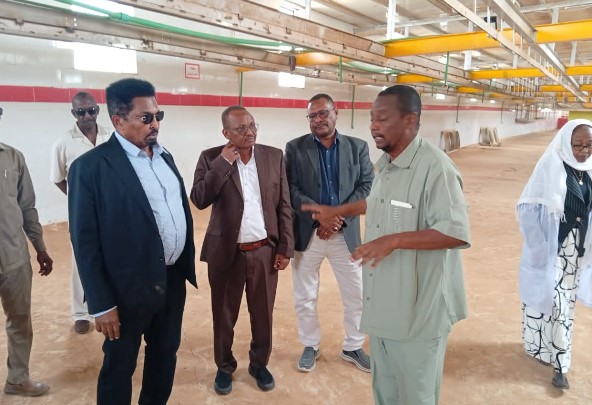
Minister of Animal Resources Ahmed Al-Tijani Al-Mansouri has acknowledged that salaries for ministers and ministry employees are weak and insufficient to meet daily needs, while unveiling plans for profit-generating projects aimed at improving staff income. He also addressed circulating claims regarding his job search and alleged possession of a United Arab Emirates (UAE) passport.
In an interview with Sudanese Echoes, Al-Mansouri said his job search took place about a year and a half ago, before returning to Sudan, accusing unnamed parties of leading misleading campaigns against him, including allegations that he holds a UAE passport.
In the same context, the minister stated that the most significant impediments facing the ministry are low wages and bureaucratic procedures in investment. He cited Saudi Arabia as a comparison, noting that completing a new investment process there takes only six hours, whereas it takes approximately 15 days in Sudan.
Al-Mansouri defended the issue of exporting female livestock, explaining that safeguarding Sudan’s intellectual property can be achieved by registering livestock under a dedicated “Sudanese brand.” He added that efforts are underway to ensure livestock production cities carry this national branding, revealing an agreement with a Sudanese company specializing in branding.
On staffing, the minister indicated that a large proportion of the ministry’s workforce is nearing retirement, with a total of approximately 2,100 employees. However, only 40 to 50 employees report to work daily, while the rest are based in countries such as Egypt, Saudi Arabia, and the United Arab Emirates and continue to receive salaries.
He gave non-attending staff until the end of June to regularize their status—either by returning to duty or submitting their resignations.
In a related matter, the minister denied any link between his ministry and meat exports to the United Arab Emirates, stating that such activities fall under the jurisdiction of the Ministry of Trade, the Central Bank of Sudan, and private sector operators, adding: “This is not our responsibility nor within our mandate.”