U.S. Congressional Committee Advances Bill to Expand Sanctions and International Intervention in Sudan
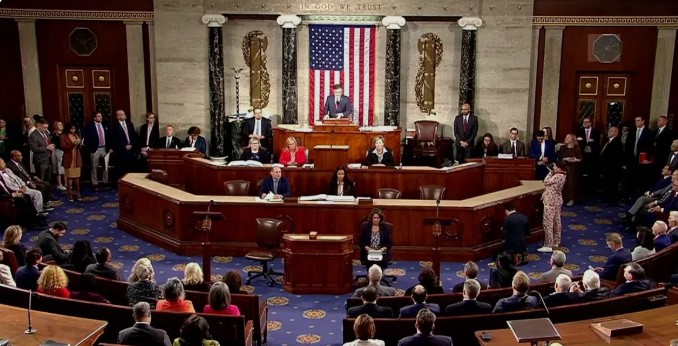
The House Foreign Affairs Committee of the U.S. House of Representatives has approved a new bill aimed at strengthening American engagement in Sudan through additional sanctions on actors involved in the ongoing war, and supporting the deployment of an international or multinational force to protect civilians and secure humanitarian aid.
A majority of committee members voted in favor of the bill, titled the “U.S. Engagement in Sudanese Peace Act,” which calls for the use of U.S. influence within the United Nations to help deploy and support a United Nations, African Union, or multinational force operating inside Sudan.
The proposed legislation includes provisions aimed at empowering Sudanese women and youth, and requires periodic reports on the unimpeded delivery of U.S. humanitarian assistance, as well as a report on U.S.-origin weapons used in the Sudanese conflict.
It also mandates the U.S. Secretary of State, in coordination with the Treasury Secretary and the Attorney General, to impose sanctions on leaders of the Rapid Support Forces (RSF) deemed responsible for strategic decisions contributing to serious violations, including genocide, war crimes, and crimes against humanity.
The sanctions framework extends, under the draft bill, to adult family members of targeted commanders, unless they publicly condemn the sanctioned activities and take concrete steps to oppose them.
The bill further reinforces the continuation of sanctions on the RSF militia as a designated entity and calls for expanding the existing arms embargo on Darfur to cover the entire territory of Sudan.
The text states that assessed contributions to the United Nations should be used to fund an African Union force to protect civilians, support ceasefire monitoring, or secure humanitarian operations in Sudan, if such a force is authorized.
It also urges increased funding for emergency response rooms and other local civil initiatives providing humanitarian assistance to populations affected by the war.
The bill still requires approval from both chambers of the U.S. Congress before becoming law. The United States has already imposed several rounds of sanctions on Sudanese and non-Sudanese individuals and entities linked to the conflict, and continues to participate in the Quad mechanism seeking a humanitarian truce leading to a permanent ceasefire and a civilian-led transitional political process in Sudan.