
“Graveyard of Industry”: 1,800 Facilities Destroyed, Losses Estimated at $58 Billion in Sudan
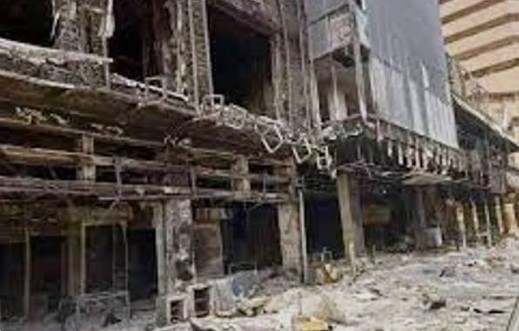
The Sudanese Industrial Chambers Union has revealed a staggering destruction bill ranging between $50 billion and $58 billion, warning that the absence of a national vision and legislative oversight threatens the country’s reconstruction prospects. The Union called for the establishment of an independent commission vested with “presidential-level” powers and subject to strict public oversight to steer Sudan from what it termed a tunnel of waste toward a path of rebuilding.
Secretary-General of the Union, Abbas Ali Al-Sayyid, urged the formation of an independent reconstruction commission with broad authorities equivalent to those of the state presidency. The body, he said, should include relevant technical, financial, and oversight entities to develop a clear and transparent national plan for rebuilding what the war has destroyed, free from individual initiatives and narrow interests.
Speaking to Sudan Tribune, Al-Sayyid stated that the country still lacks a comprehensive and publicly declared government plan to guide the post-war phase.
He explained that the proposed Reconstruction Commission should include experts in engineering, finance, auditing, and investigation, and adopt a phased strategy based on available resources, with full adherence to transparency and disclosure standards. The objective, he added, would be to reduce costs, accelerate implementation, and prioritize projects in line with the national interest.
Al-Sayyid also called for the creation of an independent administrative oversight body to enhance transparency and combat corruption, alongside activating both direct and indirect public oversight. He considered the absence of a legislative council one of the key shortcomings in managing the current transitional period.
He proposed the formation of a temporary legislative council comprising representatives of civil society organizations, professional and labor unions, employers’ federations, and chambers of commerce to contribute to oversight, accountability, and decision-making during the transitional phase.
The Union disclosed that data held by the Ministry of Industry indicate that approximately 1,800 industrial facilities have sustained varying degrees of damage, including around 650 factories that were completely destroyed—nearly 450 of them located in the industrial zone south of Khartoum.
Total losses in the industrial sector, based on estimates by industrialists, range between $50 billion and $58 billion. Al-Sayyid noted that earlier preliminary assessments had suggested losses could reach as high as $80 billion before consensus was reached on the current estimates.
He added that the most heavily affected facilities are concentrated in Khartoum and Al-Gezira States, Blue Nile Region, and parts of White Nile State, while industrial establishments in other states have not been significantly impacted.