Gebreil Ibrahim: I Do Not Cling to Finance Ministry Post; No Such Thing as “Customs Dollar” in Sudan
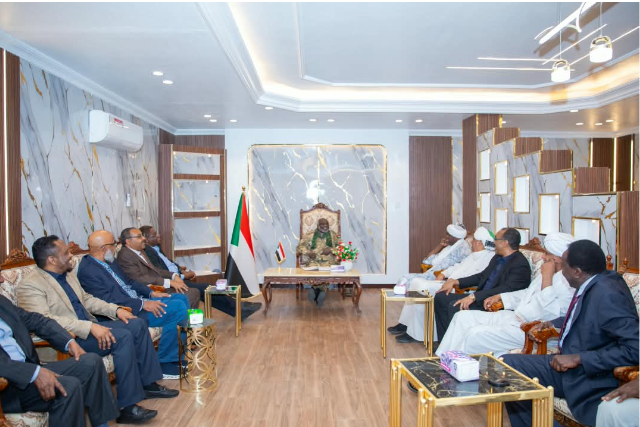
Khartoum, (Sudanese Echoes) — Sudanese Minister of Finance and National Economy Dr. Gebreil Ibrahim said he did not cling to his position as Finance Minister and could be replaced at any time in accordance with the Juba Peace Agreement.
Speaking to a delegation from the Media Forum and a group of journalism and media experts, Gebreil explained that the Juba Agreement preserves the positions and quotas allocated to the parties to the peace process, while the individuals occupying those positions may change according to the will and agreement of the partners.
On the economic front, the minister revealed that a special expanded executive committee had been formed to contain the continued rise in foreign exchange rates, saying it was close to reaching practical and effective solutions.
Gebreil denied media reports and social media claims that new increases had been introduced in the value of the “customs dollar,” describing them as unfounded. He said the government had unified the exchange rate between the Central Bank of Sudan (CBOS), commercial banks and official institutions from an early stage, noting that terms previously used, such as “customs dollar” and “indicative dollar,” no longer exist under the current financial system.
He acknowledged the severe cost-of-living crisis caused by the deterioration of the national currency, stressing that overcoming it requires greater coordination and stronger efforts between the Transitional Sovereignty Council (TSC) and the Council of Ministers.
Responding to a question from Sudanese Echoes, Gebreil said opening partnership channels with friendly countries is not the sole responsibility of the Ministry of Finance, but requires a collective effort by the state leadership to follow up on international agreements and activate productive partnerships with key countries such as China, Türkiye, Saudi Arabia and Qatar.
He also revealed that a legal committee is currently working to amend the Land Act to remove longstanding obstacles to foreign investment in Sudan.
Regarding the future of the Joint Forces and the possibility of integrating them into the Armed Forces or other regular institutions, Gebreil affirmed his movement’s readiness to implement the security arrangements stipulated in the Juba Peace Agreement without conditions, whether during the current war or at a later stage.
He called for an end to doubts and fears surrounding the issue, saying the decision by the Joint Forces to fight alongside the Armed Forces and abandon the neutrality they had maintained during the early months of the conflict was based on a firm national conviction aimed at preserving the Sudanese state and protecting it from the risks of collapse and disintegration.
“When the movements took up arms in the past, they had a clear agenda centered on the issue of marginalization. But once we saw the current war targeting the very existence of the nation, we chose to immediately side with the Army institution,” he said.
Gebreil warned that Sudan is facing a multidimensional war that began with a devastating military conflict involving several countries and has now expanded to include a fierce economic and media war.
He called on the media to play its national role in raising public awareness and combating hate speech, noting that some parties continue to exploit the lack of awareness among certain communities to promote narratives of division and racial conflict between Arab and African tribes.
Gebreil also reaffirmed the Justice and Equality Movement’s (JEM) support for completing the construction of state institutions and revitalizing constitutional work, foremost among them the establishment of a legislative council.
The meeting was attended by a number of prominent journalists and media figures, including Salah Omer Al-Sheikh, Editor-in-Chief of Sudanese Echoes; Mohamed Al-Fatih Ahmed, Director-General of Sudanese Echoes; the platform’s adviser Bukhari Bashir; and prominent writers and analysts Hassan Ismail, Adel Al-Baz and Dr. Muzammil Abu Al-Qasim.