
Government: No Truce Before Militia Withdrawal from El-Fashir and Nyala
Washington: We Reject Janjaweed’s Parallel Government — The “Libyan Scenario” Won’t Be Repeated in Sudan
The Sudanese government has denied reports that it agreed to a truce with the Rapid Support Forces (RSF) militia, affirming that no ceasefire will take place before the militia withdraws from civilian sites as stipulated by previous agreements.
In a statement to Al Arabiya, the government said there would be “no truce before the militia’s withdrawal from civilian facilities.”
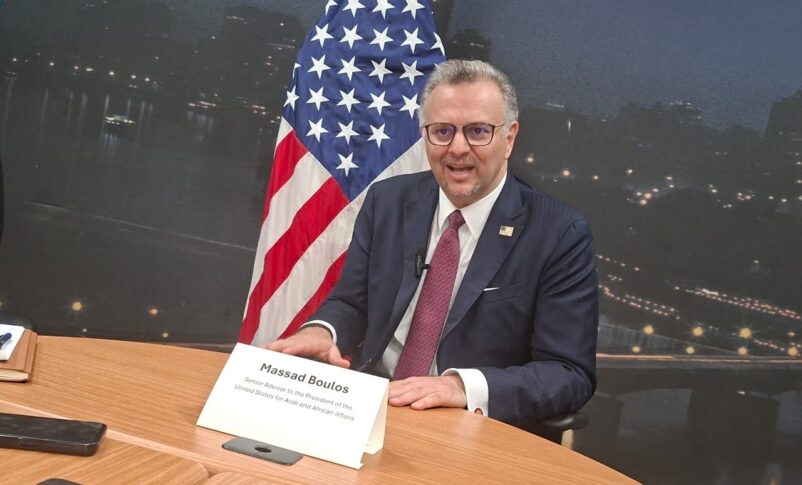
Meanwhile, U.S. President Donald Trump’s Adviser for African Affairs, Massad Boulos, said the Sudanese army does not object in principle to a humanitarian truce lasting three months, noting that both sides initially welcomed the idea and that U.S. efforts are now focused on finalizing the details.
Truce Agreement
Speaking at a press conference at the U.S. Embassy in Cairo on Monday, Boulos explained that reaching a truce agreement requires time due to “complex technical, security, and logistical details,” including monitoring and implementation mechanisms. He stressed that the goal is to reach a comprehensive understanding that paves the way for the post-truce stage within a nine-month framework outlined in the Quartet’s statement.
Boulos added that both sides had accepted the truce in principle, saying, “We recorded no initial objection from either party, and we are now focused on the fine details.”
He emphasized that the immediate objective is to reach an agreed framework for a full ceasefire, after which preparations can begin for the post-truce phase — as referenced in the Quartet’s statement issued on September 12, which mentioned three-month and nine-month phases.
The U.S. Proposal
Boulos revealed that the U.S. prepared a working paper based on the Quartet’s consensus and presented it to both parties a week ago. He clarified that there are no direct or indirect negotiations between the Sudanese government and the militia, only separate communications facilitated by the U.S. side.
He expressed hope that an agreement would be reached soon, describing the humanitarian situation in Sudan as “extremely urgent.” He also said that the atrocities committed in El-Fashir were “painful and deplorable in every sense.”
Boulos added that nearly 25 million Sudanese people now need humanitarian aid and stressed that humanitarian work “must not be tied to any political or military arrangements.” He said the U.S. is coordinating with international organizations, including United Nations Office for the Coordination of Humanitarian Affairs (OCHA), the World Food Programme, and the Red Cross, and that an American coordination committee is working with both sides to ensure the delivery of aid across Sudan, even without a formal ceasefire.
Regarding El-Fashir, Boulos explained that a coordination mechanism was established during the UN General Assembly meetings between OCHA, the RSF, and the U.S., which had successfully delivered aid to areas surrounding El-Fashir before the recent escalation made it impossible to operate inside the city.
He noted that the Quartet remains an effective framework because it includes influential countries, adding that others — including Qatar, the European Union, and Turkey — are also ready to contribute.
The Libyan Scenario
Boulos warned against repeating the “Libyan scenario” in Sudan, especially following the fall of El-Fashir and the militia’s advance in parts of Kordofan. He reaffirmed Washington’s rejection of any notion of “parallel governments,” stressing that such a development would threaten Sudan’s unity.
In response to a question from Sudan Tribune about why the U.S. has not designated the RSF as a terrorist organization despite its grave violations, Boulos said that the current stage does not call for labeling one side or the other. He noted that Washington has already condemned the atrocities in El-Fashir through official statements and imposed sanctions on individuals from both warring sides — the most recent in August.
“Our main concern now,” Boulos said, “is to address the humanitarian crisis urgently, achieve lasting peace in Sudan, and preserve its unity.”