
Differences plague Hamdok’s coalition… Arman’s movement suspends participation in Sumud
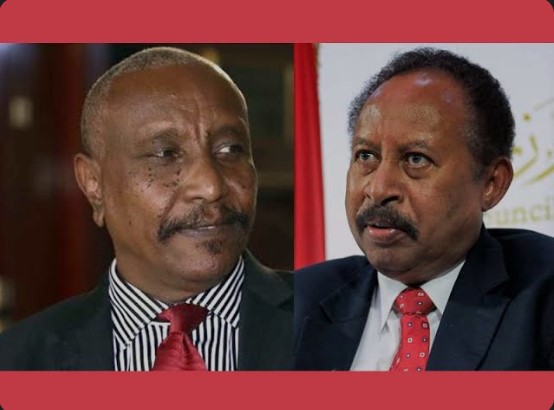
In a move that uncovers the ongoing crises within the newly formed civil society alliance, the Sudan People’s Liberation Movement – Democratic Revolutionary Current announced its suspension of its participation in the higher executive bodies of the Sumud coalition, which was established in place of the Coordination of Democratic Civilian Forces (Tagadum), following a dispute over the formation of a parallel government in partnership with the Rapid Support Forces (RSF).
Sudan Tribune learned that the Democratic Revolutionary Current sent a letter to the leadership of the new coalition, headed by Abdalla Hamdok, stressing that the current crisis is an extension of the political crisis that plagued the previous Tagadum coalition, which has spilled over entirely into Sumud.
The Revolutionary Current, led by Yasir Arman, called for the resolution of outstanding organizational issues in accordance with a clear political vision, accusing the current leadership of narrowing the decision-making circle.
This decision came amid prolonged disagreements over the representation of the Sudanese Professionals Association and its demand for the position of deputy chairman of the coalition, with many coalition forces refusing to comply with this request.
The Secretary-General of the Revolutionary Current, Al-Radi Daw’ Al-Bayt Adam, explained that they would only participate in the leadership body “to provide more opportunities for political dialogue,” while the organization would suspend its membership in the executive bodies and specialized committees of the “Sumud” coalition.
Adam called for the adoption of a new political vision focused on protecting civilians as a gateway to resolving the current crisis. This vision should be based on building an “organic alliance” of independent civilian forces as a prerequisite for reaching a sustainable solution.
He also stressed the need to shift priorities in dealing with the crisis, focusing on the humanitarian disaster and protecting civilians as an indispensable and mandatory gateway before engaging in the political process.
He added that this gateway requires mobilizing a broader front of regional and international solidarity and advocating for the interests of the populations affected by the conflict.
He warned that “placing the political process as a gateway instead of the humanitarian disaster and protecting civilians prolongs the suffering of civilians and does not stop the war.”
The Secretary-General of the Revolutionary Current criticized the leadership’s failure to overcome past mistakes, noting that the momentum of the Addis Ababa founding conference (of the former Tagadum Alliance) had been dissipated without investment, and that the new alliance was following the same approach based on “political bargaining” rather than building a truly “organic alliance.”