Sudanese-Sudanese Dialogue Conference Set for Before Year-End
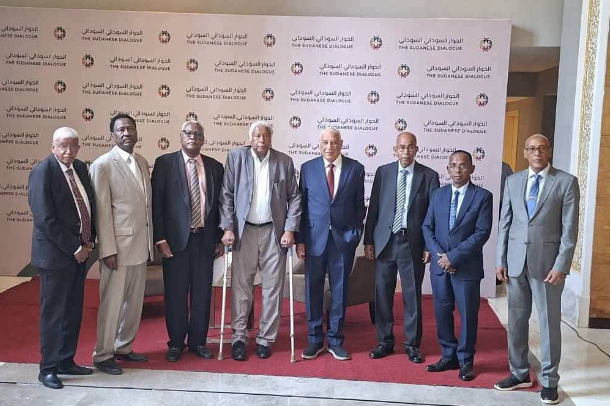
Spokesman for the Sudanese-Sudanese Dialogue Preparatory Committee, Osman Mirghani, announced that the committee had begun inviting all political forces without exception to hold consultative meetings in preparation for the Sudanese-Sudanese Dialogue Conference.
Speaking at a press conference at the committee’s headquarters in Khartoum on Tuesday, Mirghani said that the committee would begin meeting with political forces in the coming period, noting that next week would see a special meeting with the Democratic Bloc, followed by a consultative meeting with the other political forces.
He explained that the committee would continue meeting with various political components with the aim of reaching the broadest possible consensus on issues related to preparing for the dialogue. It would subsequently consolidate the outcomes of the consultations and establish a platform on which the Dialogue Conference would be based.
Mirghani revealed that the committee was maintaining ongoing contacts with international and regional forces, noting that a meeting was expected to be held outside Sudan during the current week with a group of European Union countries and the Sudan Issues Committee, in addition to ongoing meetings with other organizations and countries.
Spokesman for the Sudanese-Sudanese Dialogue Preparatory Committee expected the committee to complete its work within a limited period, expressing hope that the Sudanese-Sudanese Dialogue Conference would be held before the end of the year, bringing the committee’s mission to an end and ushering in a new phase of the dialogue.
For his part, the committee’s Political Track Coordinator, Nabil Adeeb, explained that the mandate of the Dialogue Preparatory Committee would end once the dialogue was convened, noting that the committee had prepared two papers to serve as a basis for facilitating the work of the dialogue participants. The first addresses national principles and issues that may not be raised in the dialogue, while the second addresses decision-making within the dialogue.
He stated that any proposal to partition Sudan in any form is unacceptable and may not be raised in the dialogue. He also called for adopting a decentralized system of government to suit Sudan’s diversity, recognizing all identities, in addition to adopting a democratic system as a means of governance.
Adeeb noted that decisions within the dialogue should be made by majority vote, explaining that the dialogue participants themselves would determine its agenda. He affirmed that the committee would continue communicating with all political parties and blocs, including the Sumoud movement, which he said “should be part of the dialogue,” as well as international and regional organizations.
Adeeb pointed out that the committee had completed most of the preparatory work.