
Al-Nour Quba Opens RSF “Box of Secrets”, Reveals Movements and Hemedti’s Whereabouts
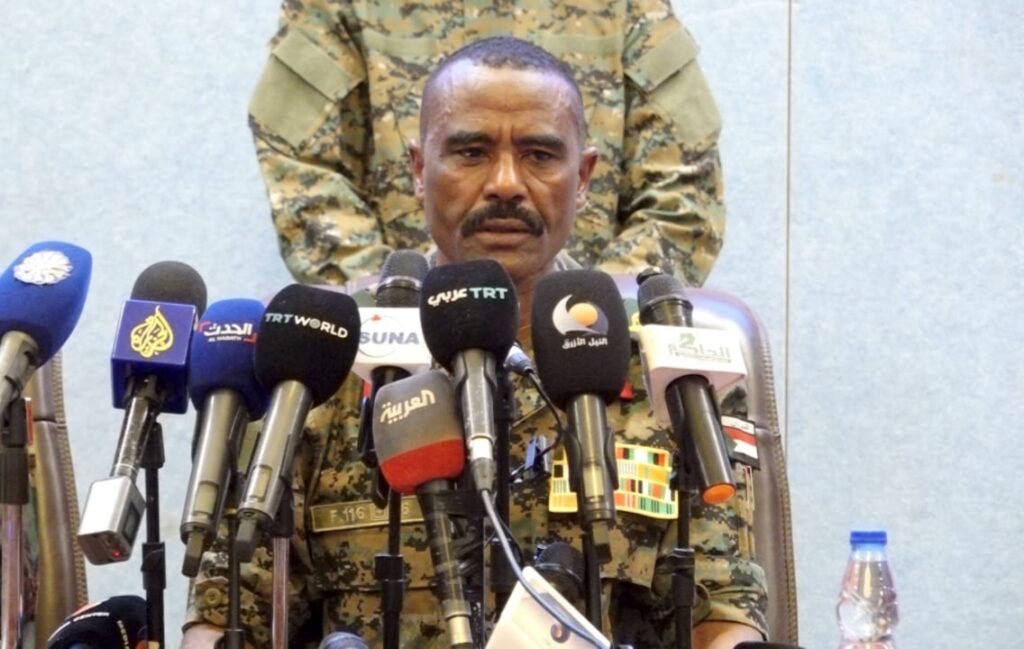
The Sudanese Armed Forces held a press conference in Khartoum during which Major General “Al-Nour Ahmed Adam,” known as “Al-Nour Quba,” who defected from the Rapid Support Forces (RSF) militia, presented information about the structure and internal workings of the group.
Quba said his military background dates back to the 6th and 16th Infantry Divisions, noting that the integration of Border Guard forces into the RSF militia in 2018–2019 was a top-down decision imposed without the consent of individuals, creating what he described as a structural imbalance from the outset.
He held the RSF fully responsible for the outbreak of the conflict, saying it was the group that fired the “first shot” that ignited the war. He added that the Sudanese Armed Forces were not prepared for war at that time, countering claims made by the RSF. He also said his forces, which were under his command, did not take part in operations in Khartoum or El-Fashir, and instead focused on protecting civilians from serious violations in RSF-controlled areas.
Quba also said there was involvement of foreign fighters from neighbouring countries operating as mercenaries within RSF ranks, supported by external supplies that have complicated the military situation.
He described the internal situation of the RSF militia as experiencing a severe collapse in morale despite the availability of weapons, saying its forces had shifted toward looting and abuses rather than combat, which he said has led many fighters to consider defection and return to the homeland.
On leadership within the group, Quba said Mohamed Hamdan Dagalo (Hemedti) is alive and currently moving between the United Arab Emirates, Kenya, and other countries, directing operations from abroad. He added that Abdel Rahim Dagalo is managing field operations via telephone amid declining control on the ground, noting that drone operations are being run through complex networks linked to internal and external command centres. He said RSF forces in Darfur are suffering from the absence of central leadership, fixed bases, and qualified commanders.
Quba concluded by saying his decision to join the army was made out of national conviction after being received by state leadership.
He called on people in Darfur and Kordofan not to be drawn into RSF narratives, and urged those within the RSFmilitia to immediately stop violations against civilians and return to the Sudanese Armed Forces to help secure the country and remove the mercenaries.
He described the situation in North Darfur as catastrophic, saying there is a complete absence of stability and basic services such as health and education.
He said El-Fashir has “collapsed” due to the conflict and that the humanitarian situation is extremely dire, stressing that RSF forces in Darfur have become fragmented groups without real leadership, which has further worsened civilian suffering amid the absence of organised civil or military administration.
Quba also said there is growing willingness among large numbers of fighters to join the Sudanese Armed Forces after recognising the futility of the war against the state and civilians, adding that further collapse within the RSF structure is looming.